What Happens When You Call
Within 1 hour: Tom or a foreman answers the emergency line. We get basic info: what happened, where you are, is anyone hurt, is the opening actively leaking.
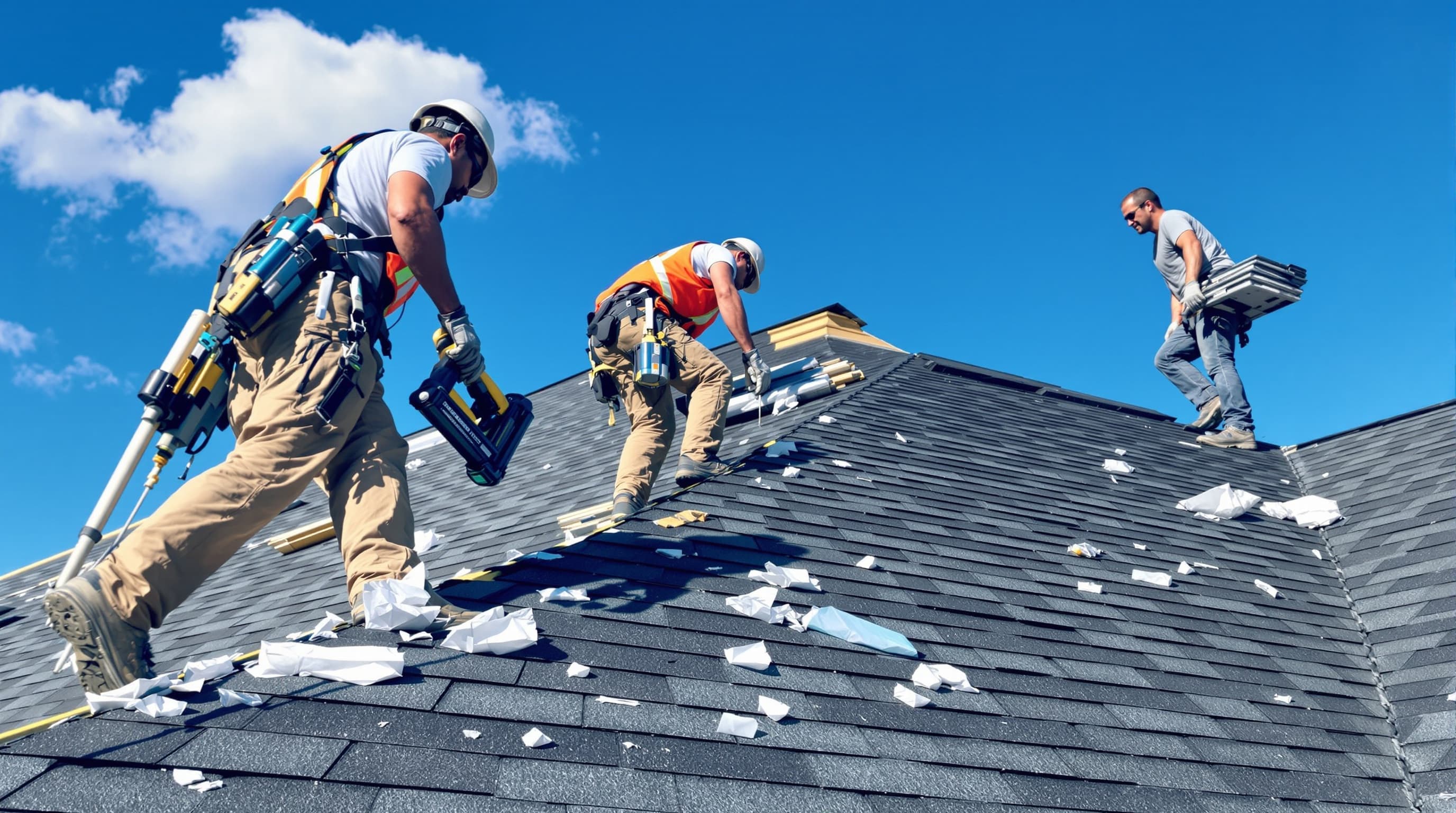
Within 4-8 hours: A crew arrives with tarps, plywood, and fasteners. We secure the opening to stop water from getting in. If a tree is involved, we coordinate with a tree service if needed.
Within 24 hours: Tom inspects the full damage, takes photos for insurance, and gives you a written scope of work and estimate for the permanent repair.
Within 48-72 hours: Permanent repair begins. Depending on the extent of damage, this could be a half-day patch or a multi-day partial replacement.
Insurance coordination: We document everything with photos and a written scope of loss. We meet your adjuster on site, walk the damage with them, and provide the documentation they need to process the claim.
When to Call the Emergency Line
Call us at any hour for:
- Tree or limb through the roof — active opening, exposed interior
- Storm-ripped shingles or decking — large section missing or peeled back
- Active water intrusion — water pouring in, not a slow drip
- Structural sagging — the roof is visibly bowing or has shifted
- Fire damage — roof structure compromised by fire
For non-emergency issues (a slow leak, a few missing shingles, maintenance questions), call during business hours and we will schedule a standard inspection within 3-7 days.
Emergency Repair Pricing
| Service | Price Range |
|---|---|
| Emergency tarp (same-day, up to 200 sqft) | $400 - $900 |
| Emergency tarp (large opening, over 200 sqft) | $900 - $1,800 |
| Permanent repair after tarp (varies widely by damage) | $1,200 - $8,000+ |
| Insurance documentation package | Included with every emergency job |
Emergency tarps are billed separately from the permanent repair. If insurance covers the damage, the tarp cost is included in the claim.
Long Island Storm Damage We See Every Year
Long Island gets hit. Nor'easters in winter and spring. Tropical storm remnants in late summer. Summer thunderstorms with 60+ mph gusts. The occasional tornado warning along the South Shore.
Wind damage is the most common. Shingles lift, tear, or blow off entirely. Poorly secured ridge vents detach. Flashing pulls away from walls. We see the most wind damage calls from October through March.
Fallen trees and limbs are second. Suffolk County's heavy tree coverage means falling limbs during storms are a constant threat, especially on properties with mature oaks and maples.
Hail damage is less common on Long Island than in the Midwest, but we see it. Hail cracks shingles, dents metal flashing, and bruises the granule surface. Hail damage may not be obvious from the ground but shows up clearly on inspection.
Ice dams form in cold winters when heat escapes through the attic, melts snow on the upper roof, and the meltwater refreezes at the eaves. The ice backup pushes water under the shingles. We repair the damage and address the ventilation issue that caused it.