Why the Leak Is Never Where You Think It Is
Water does not fall straight down through a roof. It gets in at a failure point, runs along the underside of the deck or down a rafter, and drops through the ceiling somewhere else entirely — often eight or ten feet away, and often on the other side of a wall.
That is why patching the spot above the stain so rarely works, and why homeowners end up paying for the same leak three times.
Our diagnosis runs in this order:
Inside first. We go into the attic with a light and follow the staining, the rust on the nails, and the water tracks on the rafters back uphill to the entry point. Wet insulation and darkened sheathing tell you where water has been sitting.
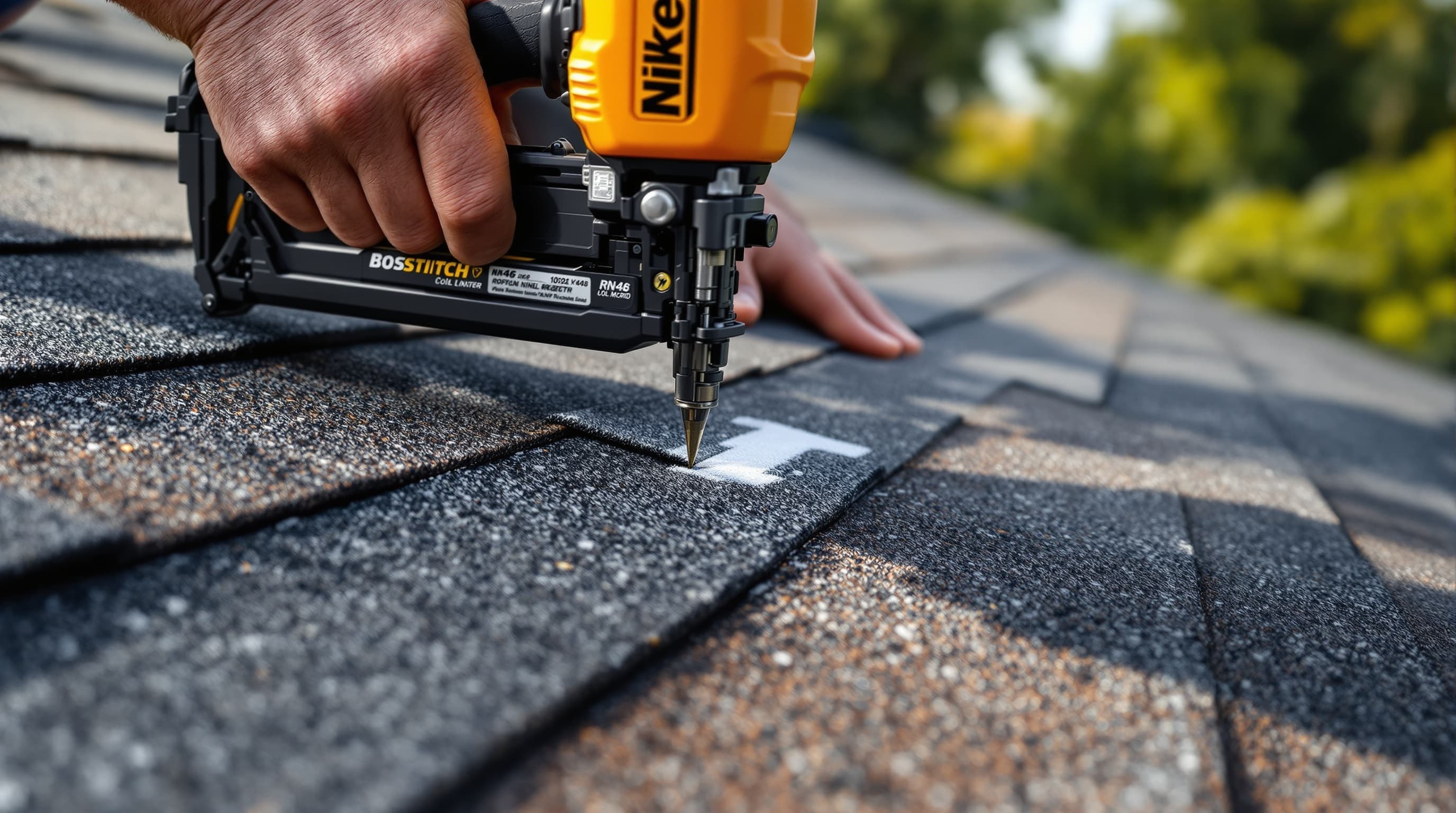
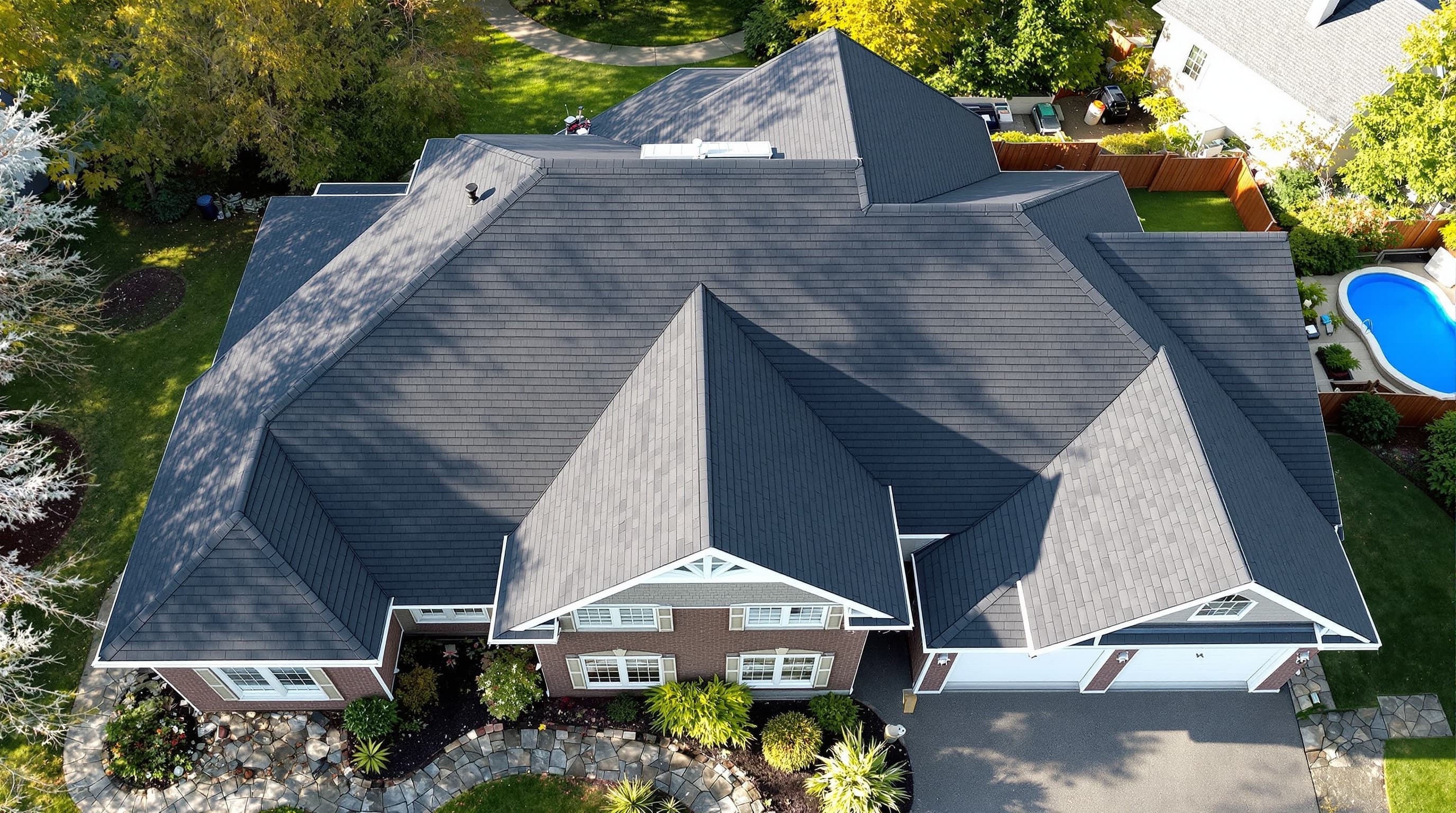
Then the roof. We go up and inspect the suspected area directly — flashing, penetrations, fasteners, shingle laps, and the deck condition around it. On steep or unsafe pitches we use a drone instead of guessing.
Then we confirm. Where the source is not obvious, we hose-test in sections, starting low and working uphill, until the leak reproduces. It is slow, and it is the only way to be certain on a stubborn leak.
You get photos of the actual failure before we quote the repair. If we cannot show you the source, we have not found it yet.
What Actually Leaks on Long Island Roofs
After a lot of leak calls across Nassau and Suffolk, the causes repeat:
Flashing failure. The single most common source. Step flashing at a sidewall, counter-flashing at a chimney, or the apron at a dormer corrodes, lifts, or was never installed correctly. Water gets behind it and runs down inside the wall.
Pipe boots. The rubber collar around every plumbing vent has a service life of roughly 10 to 15 years, then it cracks. Water runs straight down the pipe into the ceiling below. It is a one-hour repair and it causes a startling amount of damage before anyone finds it.
Skylights. Either the flashing kit around the curb or the seal on the unit itself. Skylight leaks are widely blamed on the glass and are usually the flashing.
Ice dams. North-facing slopes and uninsulated cape dormers back water up under the shingles in a bad winter. The leak shows up during a thaw, not during the storm, which is why the timing confuses people.
Valleys. Where two roof planes meet, all the water on both planes runs through one channel. Debris packs in, the metal or the woven shingle wears through, and the valley leaks under heavy rain.
Nail pops and blow-offs. Fasteners back out over time and lift a shingle tab; a nor'easter takes the tab off. Small hole, real leak.
Chimney crowns and masonry. Not always the roof at all. A cracked crown or spalling brick lets water into the chimney chase, and it lands on your ceiling looking exactly like a roof leak. We tell you when it is not a roofing problem.
If It Is Actively Leaking Right Now
Call us. During a storm event we prioritize active water intrusion over scheduled work.
What we do first. Emergency tarping to stop the water. A properly installed tarp is fastened over the ridge and battened down, not weighted with a cinder block. It buys you days or weeks safely.
What you should do before we arrive. Put a bucket under the drip. If the ceiling is bulging with trapped water, poke a small hole at the low point of the bulge with a screwdriver and let it drain into the bucket — a controlled hole beats a collapsed ceiling. Move furniture, take photos of everything for your insurance, and stay off the roof.
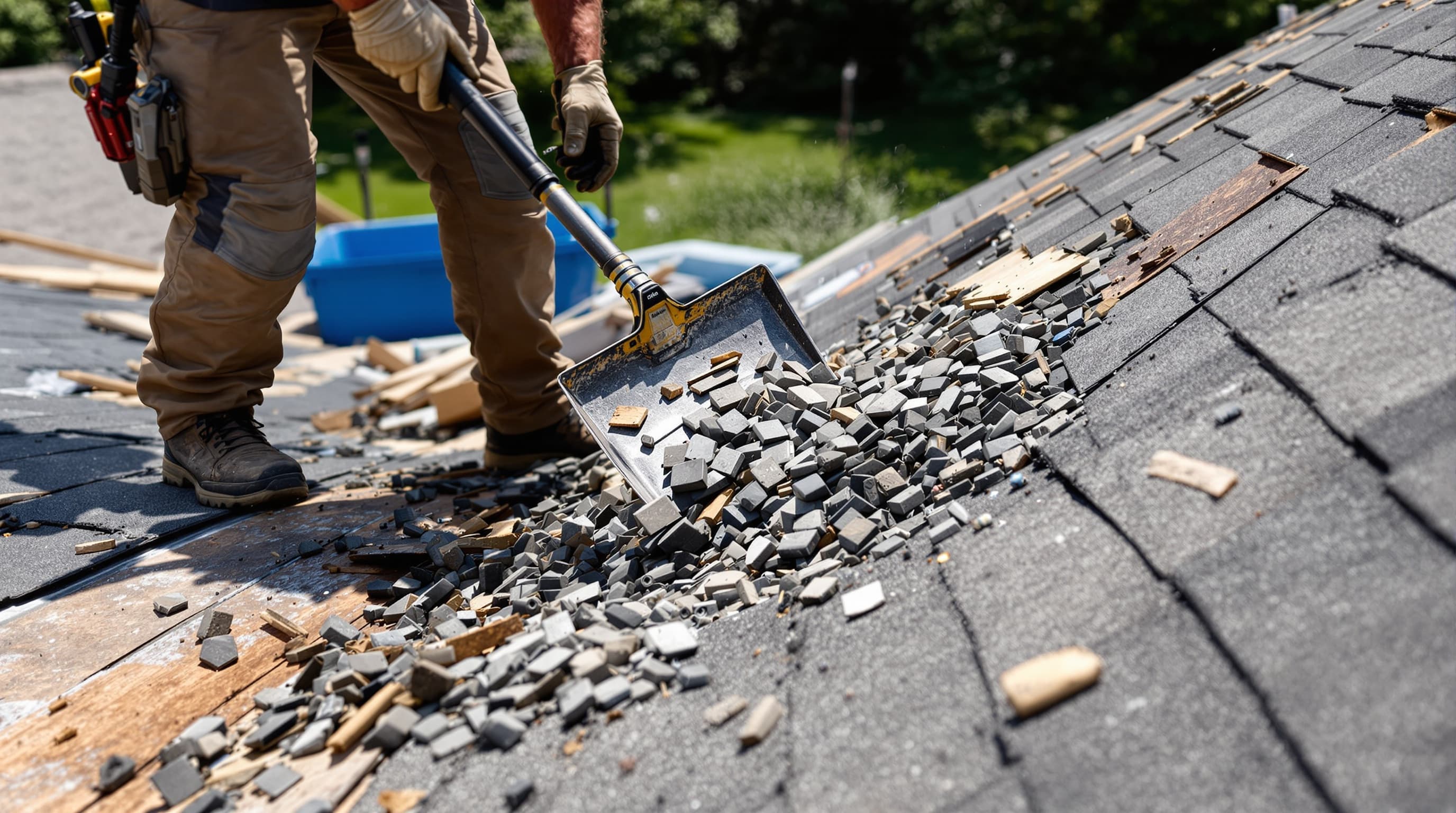
What comes next. Once the weather clears we do the full diagnosis and the permanent repair. Tarping is triage, not a fix.
What Leak Repairs Typically Cost
| Repair | Typical Range |
|---|---|
| Leak diagnosis and inspection | Free with repair |
| Pipe boot replacement | $200 - $400 |
| Chimney or sidewall flashing re-seal | $450 - $1,200 |
| Skylight re-flash | $600 - $1,500 |
| Valley repair | $800 - $2,200 |
| Localized shingle and deck repair | $350 - $1,500 |
| Emergency tarp (same-day) | $400 - $900 |
Every leak repair carries a 5-year workmanship warranty. If it leaks again through our repair, we come back and fix it at no charge.
When a leak is a symptom of a roof at the end of its life, we say so. Three separate repairs on a 22-year-old roof is money spent twice. See roof repair vs replacement for how we draw that line.
Where We Chase Leaks on Long Island
We take leak calls across Nassau and Suffolk County. Towns we respond to most often:
Nassau County: Massapequa, Hicksville, Levittown, Plainview, Syosset, Garden City, Oyster Bay, East Meadow, Hempstead, and Long Beach.
Suffolk County: Huntington, Commack, Smithtown, Bay Shore, Babylon, Islip, Hauppauge, Kings Park, Deer Park, Sayville, Patchogue, and Port Jefferson.
Not listed? Call us — we cover all of Long Island.